About
Louisa Punt-Fouché
Louisa Punt-Fouché, a South African author, poet, and artist, is an intellectual mystic and lifelong activist who embodies the spirit of service towards the voiceless. Her fourteen books and numerous art exhibitions testify to her passion for the evolution of consciousness. With luminous word paintings, Louisa’s poetry beseeches humanity to listen to the everlasting sound of Nature, while her polyphonic song verses compose a novel anthem of interbeing. Her work resonates with the music of life, like an agave tree that shoots towards the sky, collapses, and unravels into silver lace.
Her artwork and poetry are filled with accessible and spontaneous expressions in words and images. They reflect her experience of the world as an infinite paradox, united in one existence. Her poetry and art are textural compositions that convey touch and feeling through multiple voices.
Louisa’s work has been heard and experienced in lecture rooms, educational institutions, festivals of psychological development, in the courtroom, in centres for abused women and children, in individual analytic psychotherapy settings and at conferences. In these disparate settings, her work and ability to share her experiential world through opening the imaginal spaces are moving and relevant, transcending the confines of the individual context.
As an artist and poet, my goal is to inspire humanity to follow a path of kindness.
Bach’s music, making art, writing poetry, and yogic meditative practices have informed her life as an artist.
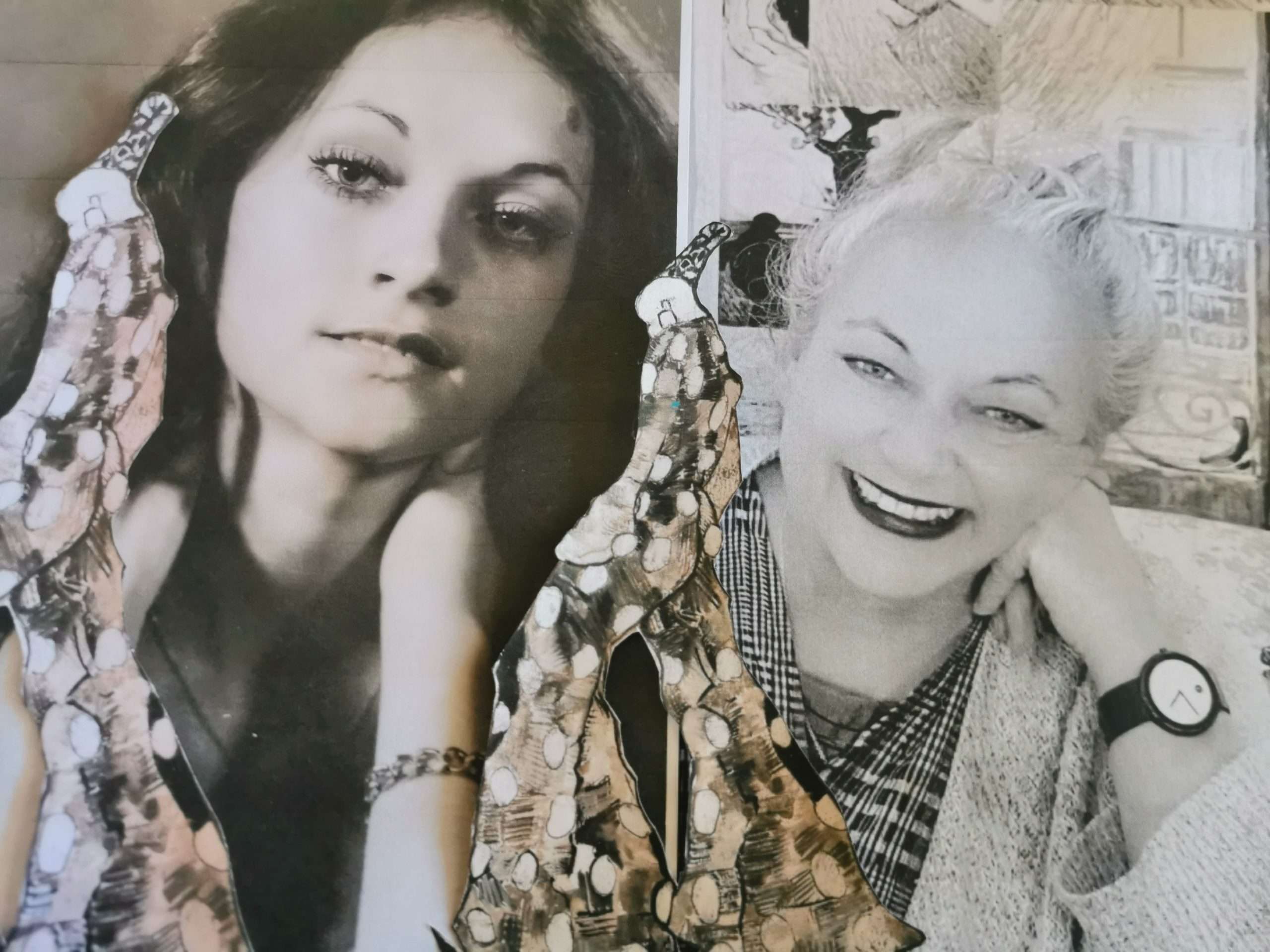
Study
Academic history
- BA. Degree (Afrikaans-Nederland, Psychology) – Stellenbosch – 1979
- Honours Degree in Counselling Psychology – cum laude – Stellenbosch – 1980
- M.A. Degree in Clinical Psychology – cum laude – Port Elizabeth – 1982
- D.Phil. Degree in Psychology – Port Elizabeth – 1993
- Buddhist studies through Ken Holmes (3 years), Director of Studies at Kagyu Samye Ling, Tibetan Buddhist Monastery, and Centre for World Peace – 2000 – 2003
- A lifelong student of the Sacred books of the Vedas (The Eternal Path and Order of Wisdom) composed in Vedic Sanskrit as a source of ancient Indian history.
“It became clear that all memories which have remained vivid to me had to do with emotional experiences that arouse uneasiness and passion in the mind… Only what is interior has proved to have substance and a determining value. As a result, outer events have faded, and perhaps these ‘outer’ experiences were never essential or were so only in that they coincided with phases of inner development.” C. G. Jung
Affiliations
Institutes & associations
- South African Institute for Psychotherapy (SAIP)
- South African Association for Psychotherapy (SAAP)
- South African Art Therapy Association
- Psychological Society of South Africa
- South African Society for Clinical Psychology
- Registered with the Health Professions Council of South Africa (HPCSA)
- Eastern Cape Art Association
- The Archive for Research in Archetypal Symbolism (ARAS)
- Member of Integral Life
- South African Society of Art
- CPD provider in the Eastern Cape from 1998 to 2006
Lifework
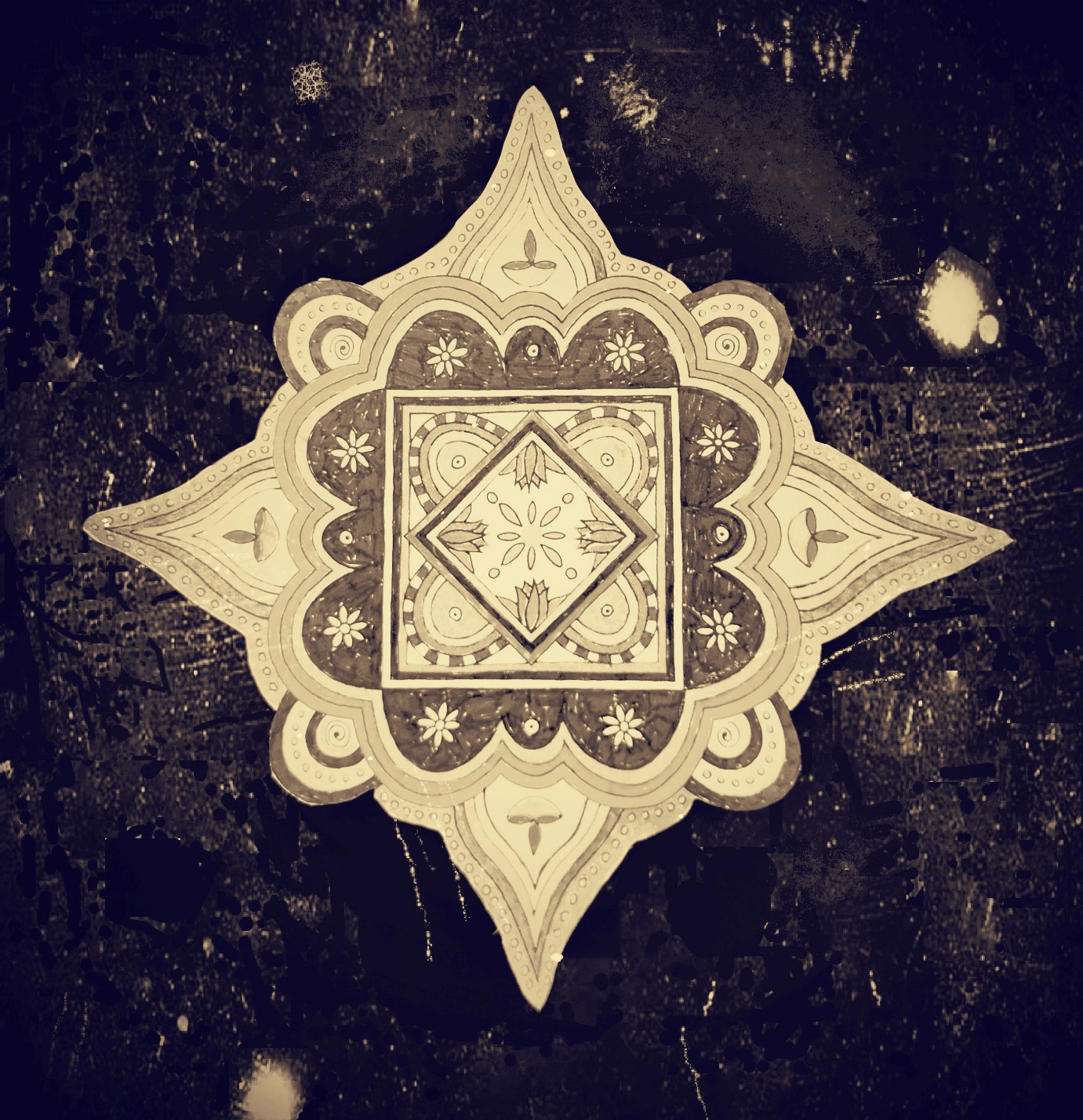
The mandala
“If I ask the value of my life, I can only measure myself against the centuries, and then I must say, Yes, it means something. Measured by the ideas of today, it means nothing.” Carl Jung
Louisa has been in clinical practice since 1984, has lectured students, social workers, and trauma specialists, has done psycho-legal work for sexually abused children, has supervised numerous master’s dissertations, and has created post-trauma recovery mindfulness programs for abused women, children and the underprivileged.
Inexplicably, the creative fire led her from her career as a Jungian psychologist (D.Phil.) to creating works of art inspired by neglected aspects of nature, animals, children, and women.
She earned her doctorate in 1993 from the University of Port Elizabeth (now Nelson Mandela University). Her thesis was a phenomenological and analytical study of using mandalas in therapy to explore the in-between space. Her research aimed to address the dissolution of humanity brought about by the personal, ideological, and political crises in South Africa, which left people feeling divided.
The mandala symbolises the Self in a constantly changing world. It represents the possibility of change within the individual and collective psyche. Each person is a mandala, a seed symbol of the Self. After the massacre at Wounded Knee, Black Elk spoke of the loss of the centre and the death of the sacred tree. These words resonate deeply in a world where darkness seems to prevail.
Mandalisation, or individuation, progressively clarifies the structures of consciousness. It leads to a renewed perception, transformation, and mutation of creative living in a diaphanous world free from time. This process aims to bring about wholeness, where humans participate not as a part but as an integral whole.
Louisa Punt-Fouché’s research on mandalas has evolved into a cultural and psychological phenomenon, especially amid catastrophic events in the twenty-first century. Her work has resulted in luminous ink drawings that feature chanting poetry, daring humanity to become one with nature and dream of a new world order based on interbeing. The verses in her polyphonic songs recreate the diamond mandala, which shimmers with infinite angles of light and encompasses all possibilities of being.
The artist
The creator of word images
Through creativity, we combat life’s final disillusionment, time’s inexorable weight and the terror and anguish of darkness through the transcendence of music — we dance, dream and sing.
Louisa’s artwork has been showcased in 24 solo and numerous group exhibitions over the last 25 years. Deeply connected to nature, she draws inspiration from the sound of the wind, the croaking of frogs, the chirping of birds, the ever-changing mountains, and the light of the sun, moon, and stars. She creates tranquil spaces that allow her to become the drawings, metaphors, symbols, and images she has experienced.
She uses various artistic techniques, including pen-and-ink drawings on rice paper, line and aquatint etchings, monotypes, collages, pastels, mixed media, conceptual art, photography, and environmental installations. She is also a jewellery maker who registered her designer label in the 1990s.
“Words and images come from the same place.” Ben Okri
Louisa experiences a close relationship between her paintings and poems. She creates them simultaneously, with the images and words expressing the various tones, textures, and shades of being present to the world and true to herself in an integral landscape. Her work embodies acceptance of agitation and playfulness, helping integrate the artwork into the universe in motion.
She writes in her journal:
Word webs and images are symbols that capture the essence of the transition. An image can evoke emotions, while language brings direct experience to consciousness. The mysterious fusion of image and word leads to the mingling and colliding of mind, soul, and spirit. This is when a sudden change occurs — a slight shift in perspective can transform everything.
Philosophy
Through art and poetry, the future is already thinking us into being.
Her passion for the natural world strongly influences how she depicts the mystical and symbolic evolution of humanity’s spiritual journey, drawing inspiration from C. G. Jung and others. The sages that have informed her writing, poetry, musings, stories, and art are Sri Aurobindo, Ramana Maharshi, Carl Gustav Jung, Siddhartha (primarily through the wisdom embodied by Lama Anagarika Govinda and Robert Thurman), Jean Gebser, John Vervaeke, Aldous Huxley, and many more — and of course, the Mountain.
Louisa writes, “The wisdom of the sage is the air that rushes through the wings of poetic intuition as it bears itself to a great vantage to observe the play of the shadow and the light dancing on earth.”
I sit silently inside the secret of my soul, which has, over time, transformed into an empty beggar’s bowl. Passers-by come and go, oblivious to my heart’s quickening beat as I fall — a pile of brash as I crash, although I hear the silver bell’s silent call. Louisa Punt-Fouché
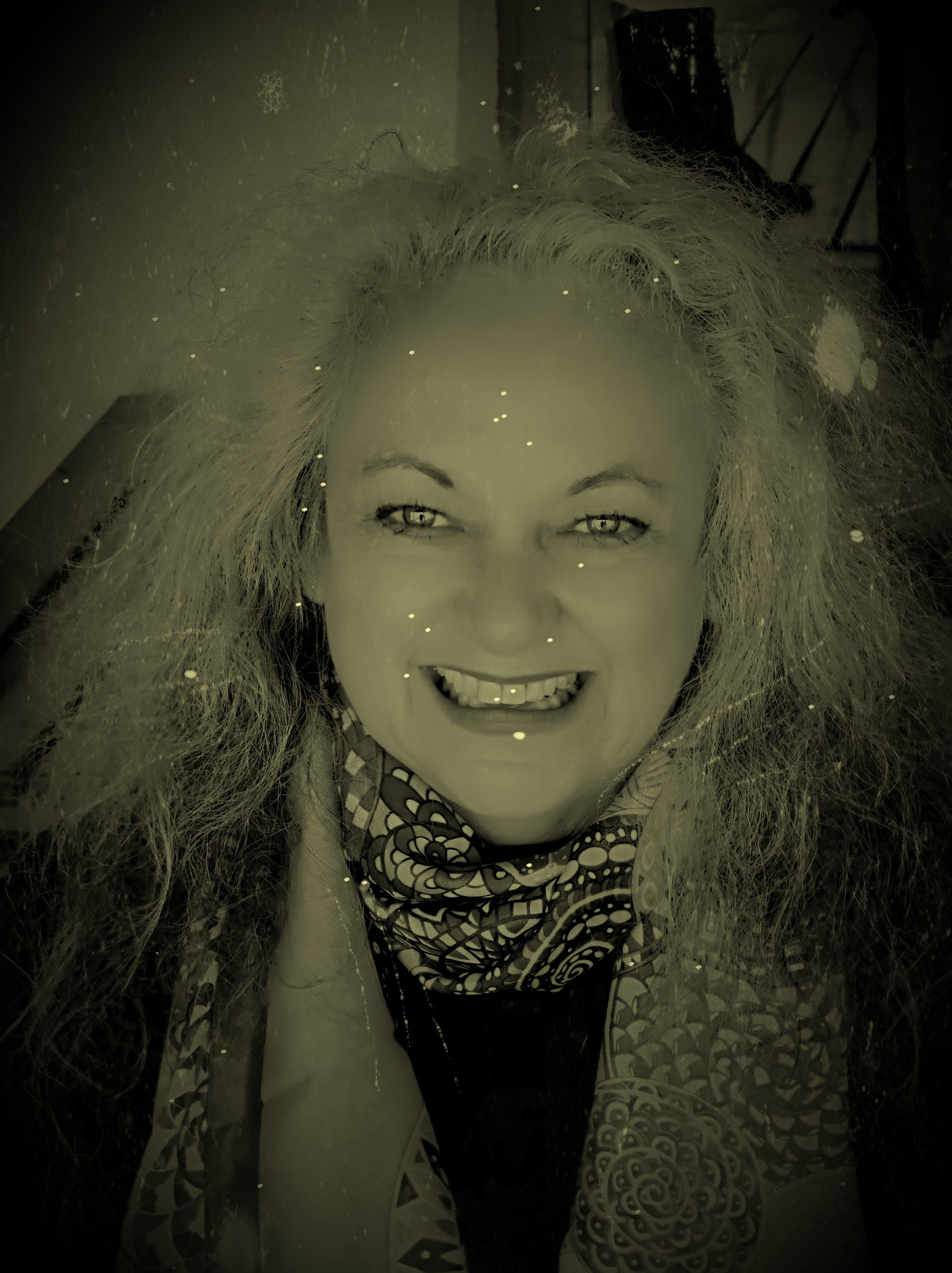
The poet
Integral — poet — Jungian thinker
“I have been writing poetry and making art since I was a little girl. I became a scholar, a wife, a mother, an old woman — and now hover in an ambiguous world of riddling opposites, which I painstakingly try to capture in lullabies of thought and image. Like Basho, I know no other way than the way of poetry and art.”
Louisa Punt-Fouché is a poet, first and foremost. She writes poetry, prose poetry, haiku, haibun and academic writing. She explores the mysteries of life with the mystery of us through our timeless relationship with Nature, other sentient beings, and the end of life itself. Louisa uses a stream-of-consciousness writing style. Her understanding of Jungian thought, Tibetan Buddhism, the Vedas, analytic phenomenology, integral reflection, and deep ecology resonate.
Louisa writes in Carrying Sand to the River:
“The process of becoming human is reminiscent of a spiralling labyrinth (mandala) in which we experience the presence of all the structures of consciousness with ever-deepening clarity and transparency. This process is an account of the nascence of a new reality rendering transparent our origin, our entire human past, and the present, which already contains the future.”
For me, the process of search is laborious and painful. At the same time, I feel it is guided by beauty, even as I know the ‘product’, the incident, is not necessarily beautiful. Only sometimes there are glimpses of an absolute and transient reality that invokes an experience of ‘suchness’ — a feeling that the infinite has been poured into the finite yet glows with something beyond the limited. In this sense, my writing is non-conceptual and intended to provoke a direct encounter with the reader.
When a word is born as a dragonfly…
When a word is born as a dragonfly,
it snags memories, myths and metaphors
with razor-sharp mandibles from mid-air —
in calculated aerial ambushes
with a keen stare in slow motion
and a ferocious dare to feast on gnats.
Oh! may my words be born as these freaky fliers
with marvellous multifaceted eyes —
to perceive the ultraviolet
on top of blue, red and green
haunting the elusive human dream
of resting in the hovering.
The explorer
Integral — idealists that do not adhere to any ideal
Louisa is an integral thinker. Her creative work endeavours to re-contextualise the present for new possibilities. It attempts to ‘open up’ the future as it unfolds in the phenomenological present, quivering with new potential. It integrates definite seeds of futurist-oriented thinking with an understanding that the past and future manifest simultaneously in every moment—a spiralling mutation of all possibilities.
Every poem, haibun, painting, or word image that Louisa creates is an attempt to open the future with a new way of thinking, perceiving, sensemaking, and imagining the world.
“Writing down these thoughts, I realise that ‘the only thing worth falling in love with is the word itself’ — that writing has become a way to hunt shadows, mine and the collective, continually researching, exploring, peering at the periphery, figuring out the edge of things.”
Intellectual mysticism
Confucius writes: “Great is the sublimity of the creative to which all beings owe their beginning, and which permeates all heaven….”
Louisa’s poetry (haiku, haibun, prose poetry) and art remix all the other structures of consciousness (archaic, magic, mythical, mental, integral) and embrace liminality. It seeks out (mostly playfully) new, latent, emergent planetary mythologies. Her work moves into the arena of intellectual mysticism, embracing the living roots of developing consciousness and how it constantly transforms and transcends reality into a translucent sphere, spiralling human consciousness across the span of history into the present—“always-already shaped by tomorrow” (Jeremy Johnson).
The textured sigh of an earthly cosmology
Louisa writes in Carrying Sand to the River that when we choose to let go, our mind becomes a complex and profoundly textured sigh. This sigh blurs the boundaries between our judgements and opinions, allowing us to surrender to the mystery of the space in between. This is a space where the human and animal, mind and earth meet — an earthly cosmology.
To travel into the future in the present, we must live on the edge or horizon of processes in liminal spaces where human and non-human meet. These liminal spaces include the intersection of human and nature, human and animal, human and the more-than-human, mind and earth, and the soles of our feet and the soil.
“The German proverb, ‘how we shout into the forest, is how the echo will sound’, is undoubtedly true. And the forest is the world. Everything that happens to us is only the answer and echo of what and how we are ourselves. And the answer will be integral only if we have approached the integral in ourselves.” Jean Gebser
Yogini, the sky dancer
The body is like space, even purer than space, more subtle than the subtle, appearing coarse yet not coarse, insentient, yet sentient. Yet the body does not conquer the yogini; she has conquered all. Hence, pleasure and pain cannot affect the yogini. She has become transparent and can never die or go away. She is forever present.
Louisa is a yogini, a ‘Divine Mother’ of universal harmony, meaning she is a female Master of Yoga. Yoginis are dedicated to achieving enlightenment and beautifully represent the spiritual grace of the sacred feminine. In Tibetan Buddhist Tantra, a yogini is called a sky dancer. In Sanskrit, ‘yoni’ refers to the womb space or source, symbolising Shakti.
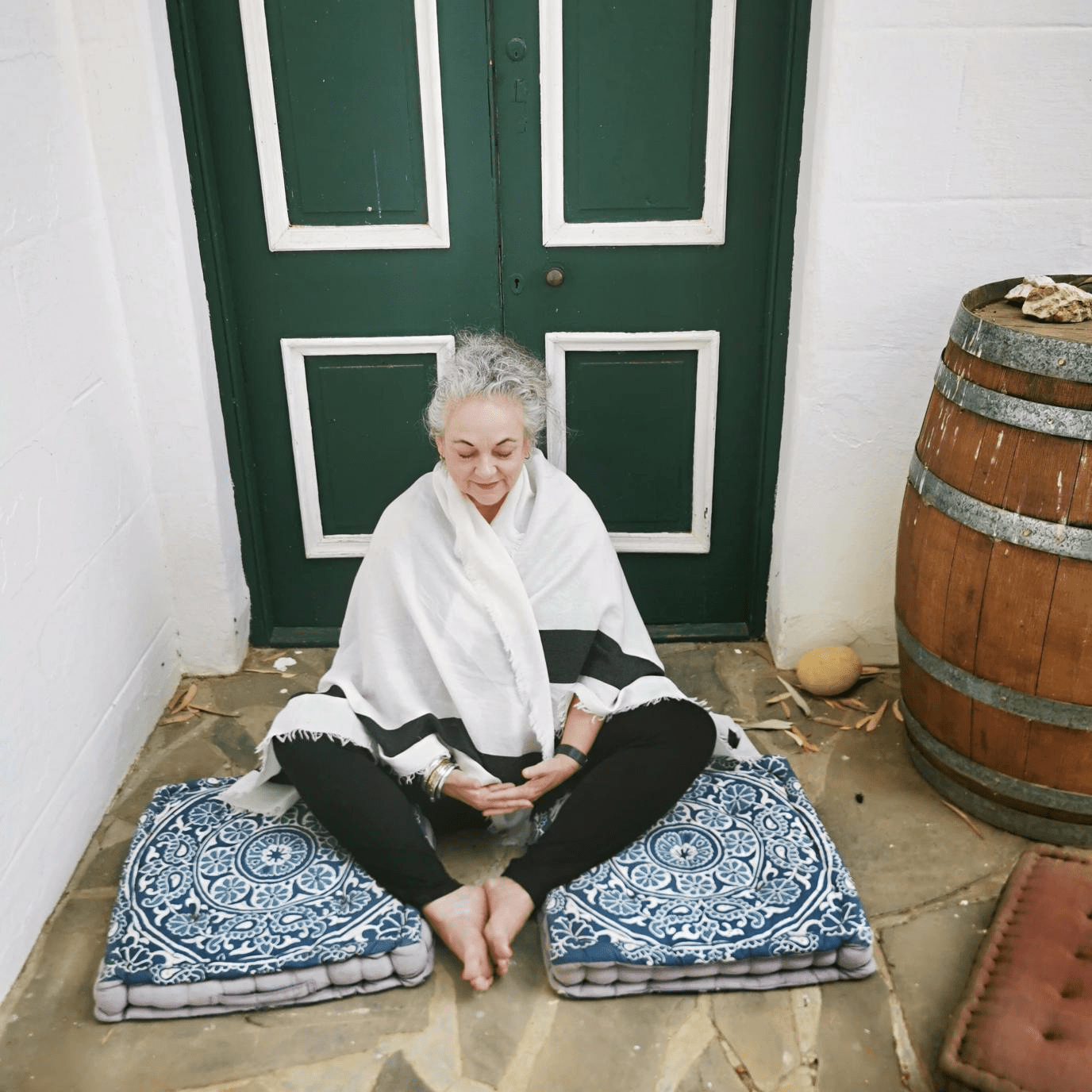
The mountain — keeping still
The mountain is a symbol, metaphor, and archetype of the primordial unity of consciousness, its outward path to the periphery, and its return to the centre—which is both the original, subjective knowledge and that gained by balancing opposites, referred to in Buddhism as the diamond palace mandala.
Within this body exist the Mountain, the plains, the rivers, the ocean and the valleys. In it also dwell the seers, the sages, the warriors and the poets, all the stars and the planets. In it whirl the sun and the moon and the wanderings of light around the eternal vowel Ohm, opening the flower of the mountain, the blooming centre of the world, where living is a spiral of emergence and emanation. Know this, and you will understand the fierce, translucent, clear consciousness of the Self.
“Every day, I look at the Swartberg mountain, which is forever present and changing. It is a constant reminder of mountain-me, a mandala in a profoundly nuanced world.”
Embrace the world around you, where textures and tones are your music, and your mind captures beauty with a butterfly net. See patterns in every moment’s unfolding and let the finest tendrils of sensory presences enfold you. Become a crow, sitting at the world’s edge, tasting the wind of interbeing.
Lean into the nights like a heavy crocheted blanket, unravelling all the yesterdays and tomorrows in various colours, shapeshifting in the now. Rise early to greet the sun when it slithers over the mountaintop, to capture the light that illuminates the night’s confusion. Hear the sizzle of newborn stars and witness the infinite living moment of a flexible eternity. Lay your cheek flat against the poetry of the mountain and remember the beginning of the beginning. Breathe deeply in a world of fugues, where multiple voices and arms embrace the uneasy harmony of it all. Let the mountain become you in its splendour and golden beauty.
The way of the Bodhisattva
A message from the Self, from Carrying Sand to the River:
“It is not enough to have the unconscious; you must produce it yourself in the present.” (Gilles Deleuze)
Sitting in my studio this morning, I feel exceptionally vulnerable as I watch the rare phenomenon of pouring rain in the Karoo. I remember the drowning of a thirteen-year-old girl two years ago in a flash flood that went over the road and how we all shared the grief of the family.
Publishing my poetry books on Amazon Kindle has become a nightmare. Last night, I saw all the poems scrambled into formless blobs and burst into tears. It is tough to put my writing into the world, and when it is reflected at me like a grinning, chaotic shadow in cyberspace, all my resolve crumbles into familiar fears.
And then, the inner voice…
Remember that your only way forward is to become fearless, like a Bodhisattva, a path you chose a long time ago after you were extremely ill. Stop the trembling in your heart, close your eyes, sit in Padmasana in the middle of your existence, and let all the emotions become the ebb and flow of the eternal sea of infinite becoming. Nothing can harm you in remembering the all-embracing nothingness you are. Your poems are only a continuous manifestation of your rigorous self-inquiry, repeatedly asking the ultimate timeless question, “Who am I?” in the absolute eternal here and now.
To condemn life as dark and sinister, unpredictable before exhausting all its possibilities, is presumptuous, unreasonable, and utterly foolish. You are only encountering your shadow. Practice perseverance and patience and give troublesome matters time to mature. Allow the unripe fruits to ripen and allow the turbulence in the stormy sea of your mind to subside — wait, wait, wait… be still.
Writing down these thoughts, I realised that the only thing worth falling in love with is the word itself — that writing has become a way to hunt shadows, mine and the collective.
I follow Bella’s cues — hovering quietly with her when she tilts her head in the direction of the unseen shadowy vapours of nuance. In these moments, we became shadow hunters, catching the unlived and unknown, which is an integral part of life on earth, fearlessly.
The encounter, integration and merging with the shadow in spirals of deepening awareness, or as Carl Jung refers to it, the process of individuation, requires a finely attuned mind that centres itself in the movement of involution and evolution, synchronised with the natural ordering laws of all nature.
It is still raining unashamedly in the dry Karoo… and I… wait… wait… wait… a momentary still point, in the whirling of the cosmos.
In hunting our shadows, we are living the questions. This is the path Louisa has chosen.
No cart · direct from the studio
Write to Louisa
There is no online checkout. Write to Louisa with the art or book you want. She will reply to arrange payment and postage from George.